
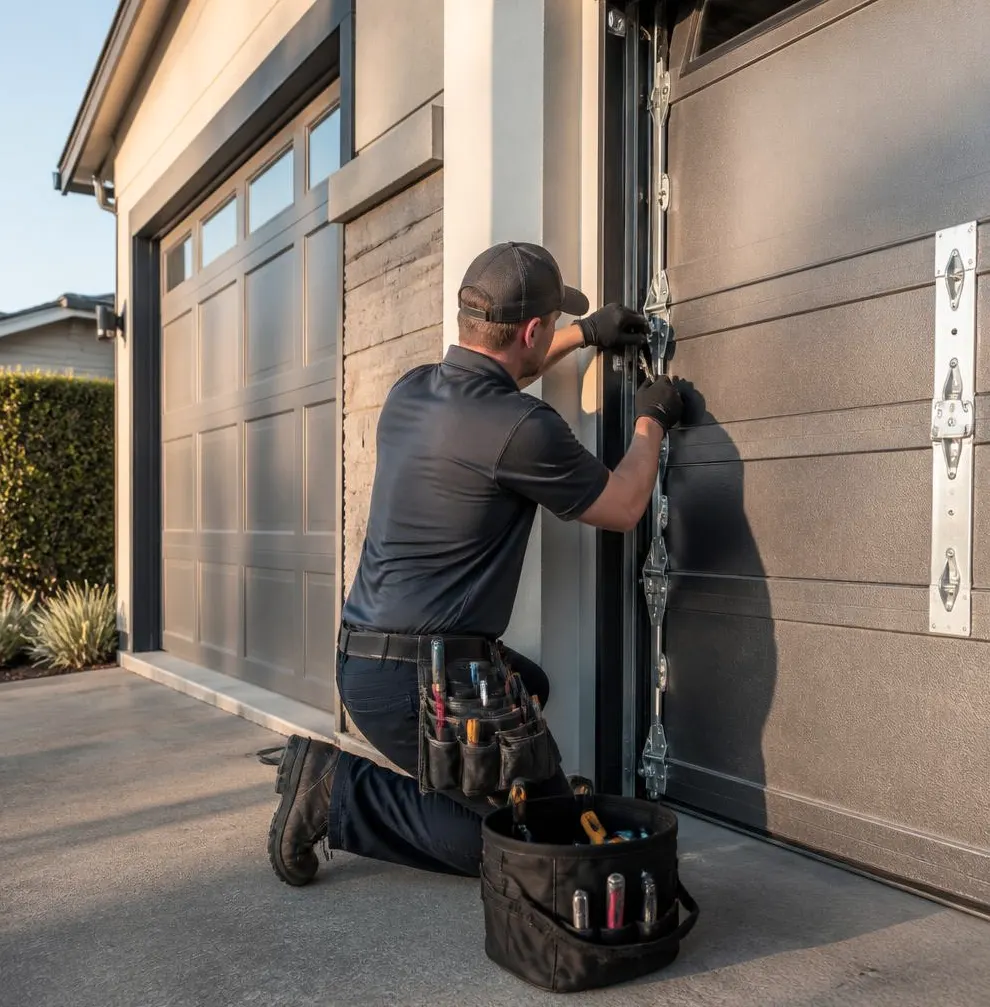
The Morning the Door Just Doesn't Feel Right
It happens on one of those first cool mornings in November, when the air finally feels dry instead of thick. You hit the button and the door groans a little longer than usual before it moves. Or it catches for a half-second on the way up. Or you notice a track bolt has a faint orange bloom on it that wasn't there back in June. None of this is dramatic, but it's your garage door telling you that six months of heat, humidity, and storms have left their mark, and now is the time to deal with it, before the hardware has to work through another season under stress.
Why This Time of Year Matters Here
Fort Myers doesn't get a hard winter, but the shift from summer's wet, oppressive air to the drier, cooler stretch that runs through the next few months is real, and it changes how a garage door behaves. Wood and composite panels that swelled slightly from months of humidity start to dry out and can shrink or warp. Metal parts that spent the summer sweating in a closed-up garage are more likely to show rust once the air dries and you actually get a good look at them. And since this transition lines up with the tail end of hurricane season, it's a natural checkpoint to see what the last few months of wind and rain actually did to your door, rather than finding out the hard way next summer.
1. Inspect for Rust and Corrosion
Walk the full length of both tracks and look closely at the hinges, rollers, and spring coils. Afternoon downpours and salt-laced air, especially if you're anywhere near the coast, speed up corrosion on exposed metal. Small surface rust on hinges can often be cleaned and treated, but pitting on the springs themselves is a different story. A spring with visible rust and flaking is weaker than it looks and is a much higher risk for snapping without warning.
2. Check the Weatherstripping
The rubber seal along the bottom of the door and around the frame takes a beating from heat and moisture all summer. By fall it may be cracked, flattened, or pulling away from the track. A failing seal lets in the afternoon rain runoff, dust, and the occasional curious lizard. Replacing it is inexpensive and worth doing before the drier months set in, since the rubber only gets more brittle as temperatures and humidity swing.
3. Re-Lubricate for the Season
Whatever lubricant you used going into summer has likely washed thin or gummed up with dust from the humid months. As the air dries out, hinges, rollers, and the opener's chain or screw drive tend to squeak more, not less, so this is a good time to wipe everything down and reapply a silicone-based garage door lubricant. Avoid WD-40 on moving parts long-term; it displaces moisture short-term but doesn't hold up.
4. Test the Balance and Auto-Reverse
Disconnect the opener and lift the door halfway by hand. It should hold its position. If it drifts up or crashes down, the springs have lost tension, which is common after a long stretch of heat cycling. Also test the auto-reverse safety feature by placing a block of wood in the door's path. If it doesn't stop and reverse immediately, that's not a maintenance item to put off.
5. Look Over Storm-Related Wear
If your door is wind-load rated, check that bracing struts, track bolts, and roller brackets weren't loosened by storm-force gusts earlier in the season. Even without a direct hit, repeated wind pressure and sudden rain can rattle hardware loose over months. Tightening everything now, rather than waiting for the next named storm, is the cheaper fix.
6. Confirm the Opener's Backup Power Still Works
Power blips from fall storms and the occasional cold front don't stop just because hurricane season is winding down. If your opener has a battery backup, test it now so you're not stuck lifting the door by hand during the next outage.
When to Call Fort Myers Garage & Gate
If you find rusted springs, a door that won't hold its balance, or hardware that's clearly been stressed by the season's weather, that's the point to call in a professional rather than keep adjusting things yourself. Fort Myers Garage & Gate handles spring replacement safely, since a corroded spring under tension is not a DIY repair, and offers a full maintenance and tune-up service that covers lubrication, hardware tightening, balance testing, and a safety check of the auto-reverse system in one visit.
If your garage door has been groaning, sticking, or showing rust since summer, call Fort Myers Garage & Gate for a seasonal tune-up before the dry months set in. We serve Fort Myers, Cape Coral, Lehigh Acres, Estero, Bonita Springs, North Fort Myers, San Carlos Park, and Gateway.